
Sunday night, the stomachache starts. Monday morning, the tears. By the time you're in the carpool line, your child is begging to stay home — and by Saturday, the stomachache has mysteriously vanished.
If this is your household, you're not alone. School anxiety is one of the most common reasons parents in Jupiter and Palm Beach Gardens reach out for support, and it can show up at any age — in the kindergartner who clings at drop-off, the third grader who dreads reading aloud, or the middle schooler who suddenly hates Mondays. The good news: it's understandable, it's common, and there are real ways to help.
What School Anxiety Can Look Like
Children don't usually say "I'm experiencing anxiety about school." They show it, often in ways that are easy to misread as defiance, laziness, or a physical illness. Some common signs:
Physical complaints. Stomachaches, headaches, or nausea that appear on school mornings and fade on weekends or holidays. These symptoms are real — anxiety genuinely lives in the body — even though there's no medical cause.
Morning meltdowns. Tears, tantrums, or flat-out refusal to get dressed, get in the car, or walk through the school doors. The child who is cheerful at 3pm and inconsolable at 7am is often a child who is anxious, not difficult.
Avoidance in disguise. Frequent trips to the school nurse, asking to be picked up early, or suddenly "forgetting" homework and projects. Avoidance is anxiety's favorite strategy — it brings instant relief and makes the fear bigger over time.
Sleep and mood changes. Trouble falling asleep on school nights, restless sleep, irritability after school, or a child who seems fine at school but falls apart the moment they get home. That after-school collapse often means they've been holding it together all day.
Perfectionism and worry. Some anxious children don't avoid school at all — they over-perform. They redo homework three times, panic over a B, or lie awake worrying about a presentation next week. Anxiety doesn't always look like fear. Sometimes it looks like trying too hard.
What’s Behind It? It Depends on the Child
School anxiety rarely has a single cause, and the driver often shifts with age. For younger children, separation anxiety is common — school is the longest stretch away from home, and the transition itself is the hard part. For elementary-aged kids, social worries often take over: who to sit with at lunch, whether friends will still like them, what happens if they get an answer wrong in front of the class.
For older children and teens, academic pressure, social media, and peer dynamics add layers. In Palm Beach County, where many schools are competitive and high-achieving, the pressure to perform can be intense — and children absorb the ambient stress of the adults around them more than we realize. A move, a change of schools, a friendship falling apart, or a difficult experience with a teacher or classmate can also be the trigger that turns ordinary nerves into something bigger.
Sometimes school anxiety is part of a broader pattern of anxiety that shows up in other areas, too. If your child worries a lot in general — about health, about the future, about things going wrong — school may simply be where the worry is loudest. Our post on parenting anxious teens explores the older end of this picture, and a parent's guide to teen mental health offers a broader view of what to watch for.
What Actually Helps (and What Doesn’t)
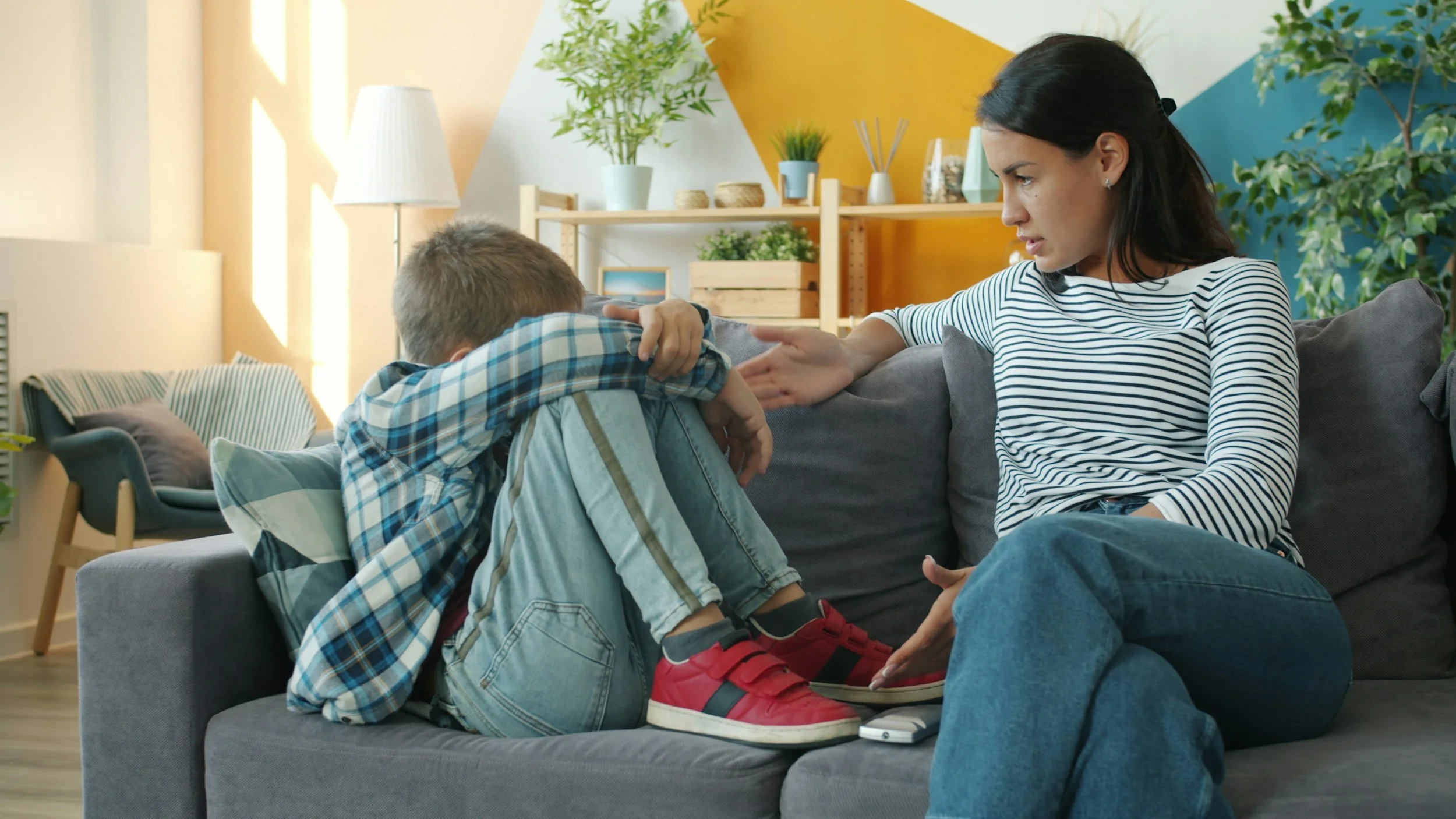
Validate first, then problem-solve. "You don't need to be scared" — however well meant — tells a child their feelings are wrong. Try: "It makes sense that this feels hard. Tell me the worst part." Children who feel heard are far more willing to face the thing they're afraid of.
Keep them going, with support. This is the hardest one. Letting a child stay home brings immediate relief — for both of you — but avoidance teaches the brain that school really is something to fear. The goal isn't to force a terrified child through the door. It's to build a bridge: a shorter goodbye, a trusted teacher to greet them, a small comfort object in the backpack, a plan for what happens if the worry spikes mid-morning.
Build predictable mornings. Anxiety loves uncertainty. A consistent morning routine — same wake time, same order of getting ready, same goodbye ritual — removes dozens of small decisions and gives an anxious child something steady to hold onto.
Talk to the school. Teachers and school counselors in Palm Beach County see school anxiety regularly, and they can often help in ways parents can't — a check-in at arrival, a quiet space to regroup, a heads-up about schedule changes. You don't have to solve this alone, and looping in the school is not overreacting.
Watch your own anxiety, gently. Children are remarkably tuned in to their parents' stress. If drop-off is the hardest part of your day, too, that's worth noticing — not with guilt, but with honesty. Calm is contagious, and so is worry.

When to Seek Extra Support
Some school anxiety is a normal part of growing up, especially around transitions — starting kindergarten, moving to a new school, returning after summer. But if the anxiety is persistent (lasting weeks, not days), if your child is missing school regularly, if their sleep or appetite has changed, or if the distress is escalating rather than easing, it's worth talking with a professional.
Parenting and family support can help you build a plan that fits your child, and anxiety therapy can give children and teens practical tools for managing worry — not by eliminating it, but by learning to move through it. Many families in Jupiter and Palm Beach Gardens find that a few sessions of guidance make school mornings noticeably easier, for everyone.
Your Child Isn’t Broken — They’re Overwhelmed
A child who is anxious about school isn't being dramatic, manipulative, or difficult. They're a small person facing something that feels too big, without yet having the words or the tools to say so. With patience, predictability, and the right support, most children don't just get through school anxiety — they come out the other side with confidence they didn't have before. That's the goal: not a child who never worries, but a child who knows they can handle it.
We’re Here to Help Your Family
If school mornings have become a daily struggle, you don't have to figure it out alone. Our therapists in Jupiter and Palm Beach Gardens — and via telehealth across Florida — work with children, teens, and parents on school anxiety, separation worries, and the stress that comes with growing up in a fast-paced county. Contact Us Today or call or text 561-570-4450 to schedule a free 15-minute consultation.
This post is for educational purposes only and is not a substitute for professional advice, diagnosis, or treatment.
